
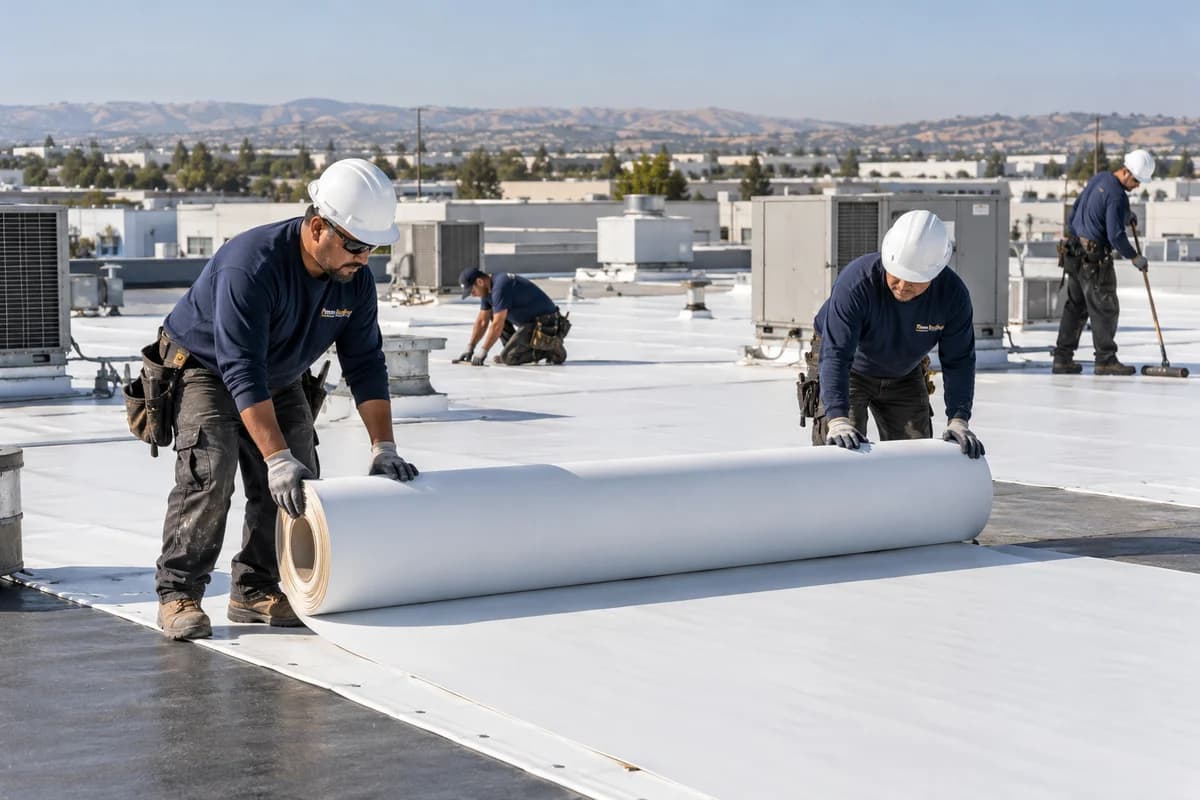
Signs you need commercial roofing
Ponding water two days after rain
Water still standing two days after a storm means the roof is not draining. Look for rings of dirt or algae where puddles sit.
Open or lifted seams
TPO and PVC sheets are heat welded together. EPDM seams are taped or glued. Modified bitumen is torched or glued. A seam edge you can lift with a fingernail is a leak path, even if nothing is dripping inside yet.
Blisters, cracks or alligatoring
Built-up and modified bitumen roofs dry out in the sun. The surface develops a cracked pattern like alligator skin, or bubbles form where moisture is trapped under the layers.
Stains on ceiling tiles or at the wall line
Brown rings on drop-ceiling tiles, bubbling paint at the top of a wall, or a musty smell near a column often point to a roof or flashing leak above.
Damage around rooftop equipment
HVAC units, exhaust fans, skylights and solar racks are where most commercial leaks start.
How the work is done
1Site visit and roof survey
The roofer walks the roof, checks every drain, scupper, curb and parapet, and takes photos. On larger buildings a core sample shows how many layers are up there and whether the insulation is wet. Safe roof access is part of this visit.
2Written scope and options
You get a written scope that separates repair, coating and replacement, with the membrane type named for each. Ask for the labor and material warranty terms in writing.
3Permits and scheduling around the building
Commercial reroofs usually need a permit, and each city or county sets its own rules. The contractor coordinates with the property manager and tenants: parking, loading dock access, noise windows, odor from torch or adhesive work, and which HVAC units shut down and when.
4Tear-off or prep
For a replacement, the old membrane and any wet insulation come off into a bin on site. For a recover or coating, the surface is cleaned and failed areas are repaired first. Crews set up edge protection and fall protection before work starts.
5Insulation, membrane and flashings
New insulation and cover board go down, then the membrane. TPO and PVC are fastened or adhered and heat welded at the seams. EPDM is glued or ballasted. Modified bitumen is torched or cold applied in overlapping rolls. Every curb, pipe, drain, scupper and parapet gets new flashing, which is where most leaks start.
6Final inspection and documents
The roofer tests the seams, checks drainage and walks the roof with you or your property manager. Keep the warranty, permit sign-off and as-built photos with the building records.
What affects the cost
No two roofs price the same. These are the things a written quote should list separately so you can compare one contractor with another.
Roof area and number of layers
Price follows square footage. Two or more old roof layers mean more tear-off and disposal than a single layer.
Membrane type and thickness
TPO, PVC, EPDM, modified bitumen and built-up roofing are priced differently, and thicker membranes cost more. PVC generally costs more than TPO but handles grease and chemicals better, which matters over restaurant kitchens.
Wet insulation and deck repair
Wet insulation found by a core sample or moisture scan has to come out. Rusted metal deck or rotted wood deck adds labor that cannot be known until the old roof is open, so ask for a unit price.
Rooftop equipment and penetrations
Each HVAC curb, pipe, skylight and drain needs its own flashing work. A roof crowded with equipment takes more time per square foot than an open roof.
Climate, energy code and insulation
Energy codes vary by state and city. Many require minimum insulation, and some require a reflective surface, depending on the climate zone. Wind uplift ratings, hail and snow load can also change the system you need. Ask the roofer or the building department what applies to your building.
Repair or replace?
Repair makes sense when the membrane is sound overall and the problems are local: a few open seams, one bad curb flashing, a clogged drain, a puncture. These are patched with matching material and rewelded or resealed. A good repair on a roof with life left is by far the cheapest option.
A coating is the middle step. Silicone or acrylic coatings, or spray foam on some roofs, go over a cleaned, repaired membrane to add a waterproof layer and extend the roof's life. Coatings work on roofs that are tired but dry. They do not fix wet insulation, failed seams or structural ponding.
Replace when leaks show up in different places every season, when a moisture scan shows much of the insulation is wet, or when the roof is past the service life for its material and repair bills keep growing.
Questions about commercial roofing
Can the roof be replaced while the building stays open?
Usually, yes. The contractor works in sections, keeps the building watertight at the end of each day, and coordinates with the property manager on noise, parking, dock access and HVAC shutdowns.
Which membrane is right for my building?
It depends on the roof, the climate and what happens under it. TPO and PVC are common because they are white, reflective and heat welded. EPDM is a durable rubber membrane used in many climates. Modified bitumen and built-up roofing suit roofs with heavy foot traffic. Ask for two options in the bid.
Does a new commercial roof have to meet energy code?
In most places a roof replacement triggers energy code rules, but the rules differ by state, city and climate zone. They can cover insulation levels and reflective surfaces. The building department confirms what applies when the permit is pulled.
How often should a commercial roof be inspected?
Twice a year is common practice, often in spring and fall, or before and after your area's worst weather. Also inspect after any rooftop HVAC or solar work and after hail, high wind or a heavy storm.
What should be in a commercial roofing bid?
The membrane brand, type and thickness, insulation type and R-value, how the roof will be attached, how penetrations and parapets will be flashed, the drainage plan, the warranty on labor and material, the permit, and a unit price for deck repair found during tear-off. Also check the contractor's insurance and any state license.