
Signs you need shingle roof replacement
Bare patches and granules in the gutters
Granules protect the asphalt from the sun. Shiny or dark patches on the shingles, or a layer of grit in the gutters and at the downspout outlets, mean the shingles are near the end of their life.
Curling, cupping or cracked shingles
Edges that turn up, centers that dish, or shingles that crack when pressed mean the mat has dried out.
Stains on ceilings or in the attic
Brown rings on a ceiling, dark streaks under the roof deck or damp insulation point to water getting through, often at a valley, vent or chimney flashing.
Storm damage from hail or wind
Bruised shingles with missing granules, creased tabs and shingles blown off the roof are all storm signs. Hail damage is often invisible from the ground, so have a roofer inspect before you file a claim.
A roof already on its second layer
If a previous owner laid new shingles over old ones, the roof already has two layers. Many codes do not allow a third, so the next job is a full tear-off.
How the work is done
1Inspection and quote
The roofer checks the shingles, flashings, attic ventilation and deck from inside the attic. The written quote names the shingle line, underlayment, ventilation plan and flashing.
2Permit, license and insurance check
Most cities and counties require a permit for a roof replacement, and each one sets its own rules. Some states license roofers and some do not. Where a state board exists, check it, then confirm insurance and any local registration.
3Tear-off and deck inspection
Old shingles, underlayment and flashings come off into a dumpster. With the deck bare, the crew replaces rotted sheathing and renails loose sheets.
4Underlayment, ice barrier and edge metal
Drip edge goes on the eaves, then underlayment covers the deck. In cold climates, a self-adhered ice and water shield goes along the eaves and in valleys, and local code often requires it.
5Flashing and ventilation
New pipe flashings, step flashing where the roof meets a wall, chimney flashing and valley metal go in. Intake vents at the eaves and exhaust vents along the ridge move air through the attic.
6Shingles, ridge and cleanup
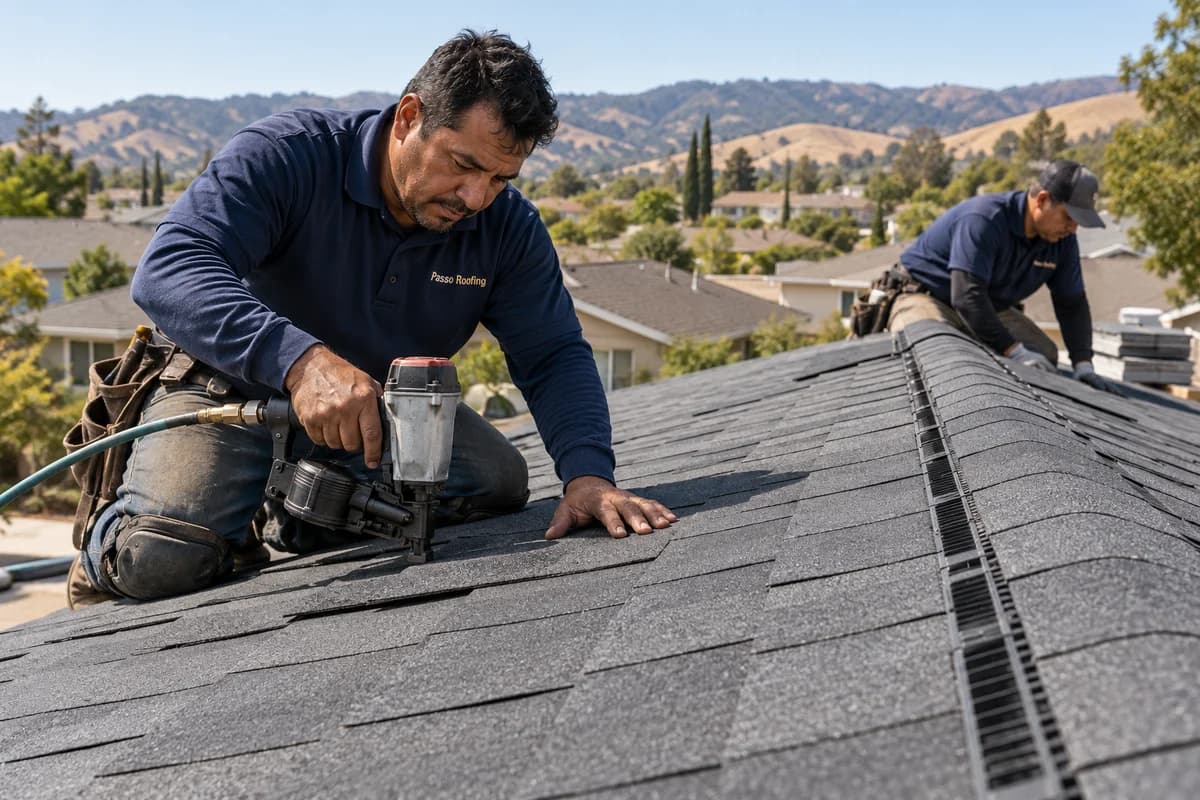
A starter strip goes along the eaves, then shingles are nailed in courses to the manufacturer's nail pattern. In hail and hurricane regions, nail count and placement matter even more. Ridge caps finish the top.
What affects the cost
No two roofs price the same. These are the things a written quote should list separately so you can compare one contractor with another.
Roof size, pitch and complexity
Square footage is the base. Steep pitches, hips, valleys, dormers and skylights all add labor.
Number of layers to remove
A roof with two existing layers takes longer to tear off and fills more of the dumpster than a single layer.
Shingle grade
Three-tab shingles cost the least and are thinner. Architectural, or dimensional, shingles cost more, look thicker and carry a longer warranty. Impact-rated shingles for hail regions cost more than standard lines.
Climate-driven materials
Ice and water shield in cold regions, higher wind-rated shingles and extra fastening in coastal and hurricane areas, and added ventilation in hot attics all change the material list and the price.
Deck repair
Rotted plywood is replaced by the sheet. Ask for a per-sheet price in the bid.
Repair or replace?
Repair when the shingles are still flexible and the damage is local: a few tabs lost in a windstorm, a cracked pipe boot, a bad chimney flashing. The roofer slides in matching shingles and resets the flashing.
Tear off and replace when the wear is everywhere: bare asphalt, curling, granules filling the gutters, or leaks that move from one spot to another. A full tear-off lets the roofer see and fix the deck, install new underlayment and flashings, and correct the ventilation.
Some owners ask about an overlay, laying new shingles over the old ones to save on tear-off. Building codes limit how many layers a roof can carry, and the limit differs by state and city, so check the local code and count your layers first. Even where allowed, an overlay hides deck problems, adds weight and can shorten the new roof's life.
Questions about shingle roof replacement
How long does an asphalt shingle roof last?
It depends on the shingle grade, attic ventilation, and your climate. Strong sun, hail, wind, and big temperature swings all wear shingles faster. A local roofer can tell you where your roof stands.
Can I put new shingles over my old roof?
Sometimes, but it is usually not a good idea. Codes limit the number of roof layers, and the rule depends on where you live. Ask your city or county building department. A tear-off also lets the roofer fix the deck and flashings.
What is the difference between three-tab and architectural shingles?
Three-tab shingles are flat, thin and the lowest cost. Architectural shingles are laminated, thicker and usually carry a longer warranty and better wind resistance.
Do I need a ridge vent, and what about ice and water shield?
Attic ventilation keeps the deck dry and the shingles cooler, and many shingle warranties require it. A ridge vent with intake vents at the eaves is a common setup. Ice and water shield matters where snow and ice dams form, and many northern codes require it at the eaves. Ask the roofer what your local code says.
What should I look for in a shingle roof quote?
The shingle brand and product line, underlayment, ice barrier details, new flashings, the ventilation plan, a per-sheet price for deck repair, the permit, cleanup, and a labor warranty separate from the manufacturer's. In hail or hurricane regions, ask about impact and wind ratings, and fire class.