
Signs you need roof leak repair
Water stains on a ceiling or wall
A brown or yellow ring on drywall, often near an exterior wall, a chimney or a bathroom vent. A ring that grows after each storm is an active leak, not an old one.
Dripping during or after rain or snowmelt
Water dripping from a light fixture, a vent or a ceiling seam. A drip that keeps going hours after the weather clears usually means water is pooled on the underlayment or in the insulation. In cold climates, a leak that only shows during a thaw often points to an ice dam.
Wet or matted attic insulation
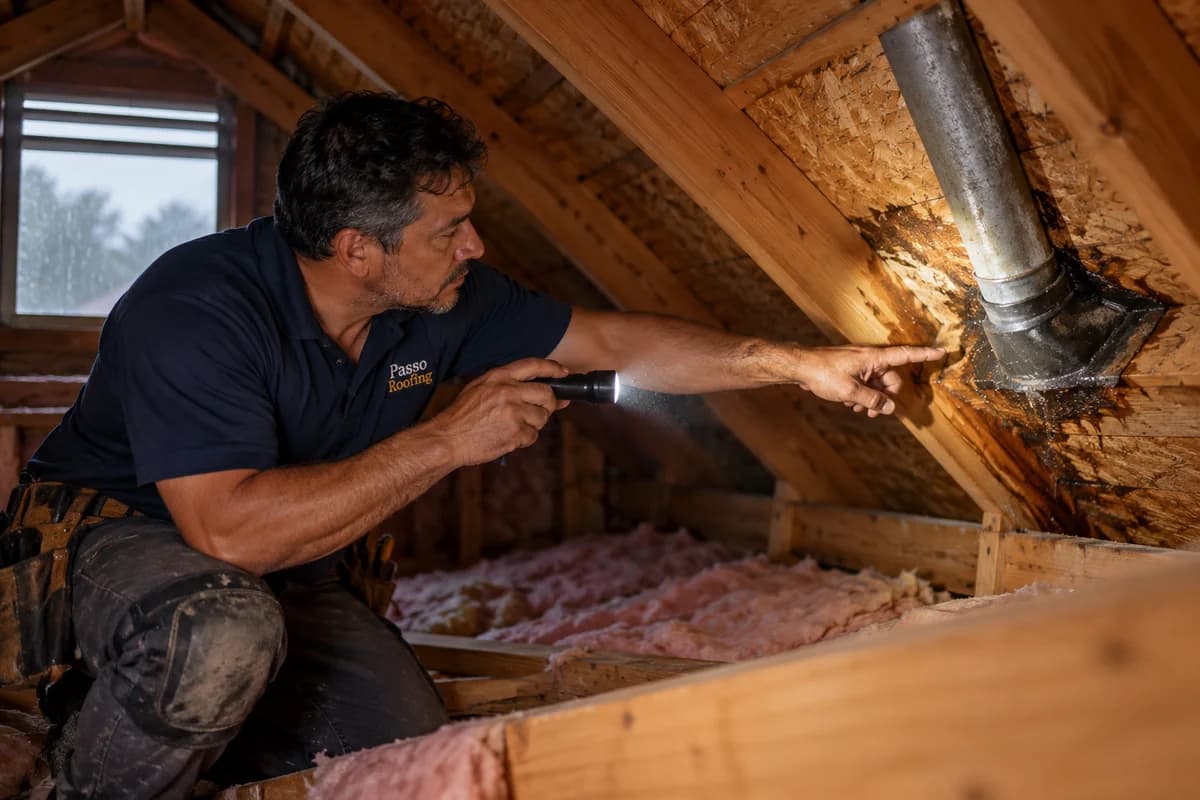
Go into the attic with a flashlight after a storm. Dark, compressed insulation, water trails on the underside of the roof deck, or rusty nail tips point straight at the entry area.
Mold or a musty smell
A persistent musty odor in a closet or bedroom under the roof means water is getting in slowly, even if no stain has appeared yet.
Granules, broken pieces or debris in the gutters
Shingle granules piling up at a downspout, or fragments of tile, slate or shake in the gutter, mean the roof surface has an open spot that water will find.
How the work is done
1Inside inspection first
The roofer looks at the stain, the attic and the insulation to find where water is actually landing.
2Trace the leak on the roof
On the roof, the roofer checks uphill of that point: flashings at chimneys, skylights, pipes and walls, the valleys, and any cracked, slipped or missing roofing.
3Temporary protection if needed
If more weather is coming before the repair can be done, a tarp or a temporary seal keeps water out. This is a stopgap, not the fix.
4Written repair plan and quote
You get a written description of the cause, the repair and the cost before work starts. Ask for photos of the damaged area.
5The repair
Typical repairs include replacing damaged shingles or tiles, replacing a section of worn underlayment, re-flashing a pipe or chimney, resealing a skylight curb, clearing a blocked valley, or patching a seam on a flat roof. Larger repairs may need a permit, so ask the roofer or the local building department.
6Check the surrounding area and clean up
A good roofer checks neighboring flashings and valleys while on the roof, since the same age and weather affected them. Debris and old fasteners are removed before the roofer leaves.
What affects the cost
No two roofs price the same. These are the things a written quote should list separately so you can compare one contractor with another.
How hard the leak is to find
A leak at an exposed pipe flashing takes less time than one that travels along a rafter from a hidden valley.
Roof material
Asphalt shingle repairs are usually simpler. Tile, slate and wood shake mean lifting and resetting pieces, and matching ones that are no longer made can add time. Metal and flat roofs need their own methods.
Size of the area affected
Fixing a few damaged shingles is one job. If the underlayment or the surface is worn across a whole slope, the repair grows into a partial or full re-roof.
Roof pitch and access
Steep roofs and second stories take longer and need more safety setup.
Deck damage
If the plywood or plank deck under the leak is soft or rotted, that section has to be cut out and replaced before new roofing goes on.
Flashing, chimney and local rules
Leaks around chimneys and skylights often need new metal flashing or a new cricket behind the chimney. That is more labor than a surface patch. Local permit rules can add steps in some cities.
Repair or replace?
A single leak with a clear cause on a roof that otherwise has years left is a repair. One cracked tile, one failed pipe boot, one bad skylight seal. Fix it and move on.
Leaks that show up in a new place every storm season tell a different story. That pattern usually means the roofing or the underlayment has reached the end of its life across the roof, not in one spot. Patching one area buys time. The roofer should tell you plainly if that is what they see. Climate matters too: sun, hail and freeze-thaw cycles shorten a roof's life.
Ask the roofer two questions: what caused this leak, and what condition is the rest of the roof in? A written answer to both lets you decide between a repair now and a replacement on your own schedule, rather than in the middle of a storm.
Questions about roof leak repair
Can a roof leak be repaired in bad weather?
The roofer can protect the area right away with a tarp or a temporary seal. Permanent work usually needs a dry roof, because sealants and underlayment do not bond to wet surfaces. The roofer will return once conditions allow.
Why does my roof leak when nothing looks broken?
Most of the waterproofing is hidden. Underlayment, flashing and sealant wear out under the visible surface. Water that gets past the shingles, tiles or panels at a valley, a pipe or a wall joint can run a long way before it shows up inside.
Will the repair match my existing roof?
For asphalt shingles, the roofer tries to match color and profile, but sun-faded shingles rarely match new ones perfectly. For tile, slate or metal, salvaged or matching pieces are sometimes available and sometimes not. Ask to see the match first if appearance matters.
Should I call my insurance company first?
Stop the water first, then call your insurer. Policies often cover sudden damage from a storm or a falling branch but not wear and age. Keep the roofer's photos and written report for the claim. The roofer cannot tell you what it covers.
How do I know the roofer is licensed?
It depends on your state. Some states license roofing contractors and some leave it to cities or counties. Where a state board exists, look the contractor up on its website to see whether the license is active. Also ask for proof of liability insurance and workers' compensation, and ask about local registration.