
Signs you need roof repair
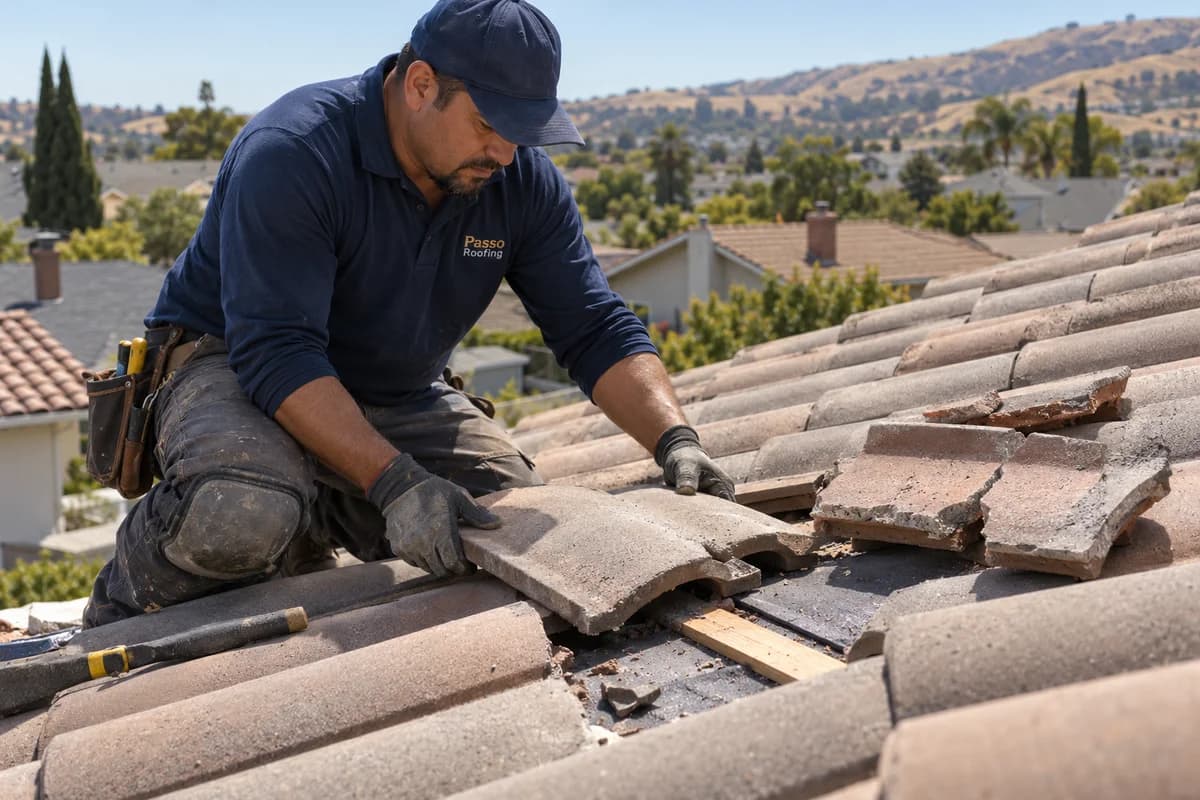
Missing, lifted or cracked roofing pieces
Look from the ground or a ladder for shingles that are curled, torn or gone, or tiles and slates that have cracked or slid down the slope. A gap exposes the underlayment to sun and water.
Damage after a storm
After hail, high wind or a falling branch, check for dented metal, bruised shingles, bare spots on ridges and edges, and debris in the yard. Take dated photos for an insurance claim.
Rust or gaps at flashings
Flashing is the metal where the roof meets a chimney, wall, skylight or pipe. Rust, lifted edges, cracked sealant, or a pipe boot with a split rubber collar are common repair calls.
Clogged or rusted valleys
Valleys carry the most water on the roof. Debris packed in a valley, or valley metal that has rusted through, backs water under the roofing on both sides.
Granules in the gutters
On shingle roofs, piles of sand-like granules at the downspouts mean the shingles are shedding their protective surface. A few granules are normal. Piles are not.
Sagging, soft spots or daylight in the attic
Light showing through the roof deck, a soft spot underfoot, or a dip in the roof line means water has been getting in for a while. Get a closer look soon.
How the work is done
1Inspection of the roof and attic
The roofer walks the roof, or uses a drone or ladder where walking is not safe, and checks the attic for stains and wet insulation. The goal is the full list of problems, not just the one you noticed.
2Written quote with photos
You should get a written description of each repair, the materials, and the cost. Photos let you compare quotes line by line.
3Permit check
Rules differ by city and county. A small repair often needs no permit, but larger repairs may. Ask the roofer, or call the local building department, before work starts.
4Materials and weather window
The roofer orders matching materials and picks a dry, safe day. Sealants do not bond well to wet surfaces.
5The repair
Common repairs include replacing damaged shingles, tiles or panels, installing new pipe boots, re-flashing a chimney or wall, clearing and relining a valley, and replacing rotted deck boards.
6Final walk-through and cleanup
The roofer checks nearby areas for related wear, removes debris and old fasteners from the yard and gutters, and shows you photos of the finished work.
What affects the cost
No two roofs price the same. These are the things a written quote should list separately so you can compare one contractor with another.
Roof material
Asphalt shingle repairs are usually the most straightforward. Tile, slate, wood shake and metal need specialized handling,.
Size and number of repairs
One pipe boot is a short visit. Several areas of storm damage across different slopes take longer, and the cost of the visit is spread across more work.
Roof pitch, height and access
Steep slopes, multi-story homes and roofs with no safe ladder spot take more time and more safety equipment.
Hidden damage
Rotted deck boards or wet insulation under a small visible problem add work. The full extent may show only when old roofing comes off.
Local permits and code
Permit fees, inspections and code requirements are set by your city or county, and by your state's building and energy codes. They vary widely and can add cost or time to larger repairs.
Repair or replace?
A repair makes sense when the damage is limited and the rest of the roof still has useful life. Storm damage to one slope, a failed flashing, a few missing shingles, or a cracked tile are all good repair jobs.
Repair stops making sense when problems are spread across the whole roof. Widespread shingle curling, bald patches, repeated leaks in different places, or underlayment that crumbles when lifted all suggest the roof is near the end of its life. Strong sun, hail and freeze-thaw cycles speed this up. Ask the roofer to tell you plainly which case you are in.
If you are paying for repairs every year, a replacement may cost less over time. Ask the roofer for a written opinion on both options.
Questions about roof repair
Do I need a permit for a roof repair?
Usually not for a small repair, and usually yes for a full replacement. Each city and county sets its own rule, so ask the roofer or call the local building department.
How long does a roof repair take?
Most small repairs take a few hours to a day. Larger repairs, or work that needs deck replacement or special-order materials, take longer. Weather can push the schedule.
Will my homeowners insurance cover the repair?
Often, if the damage came from a sudden event such as hail, wind or a fallen tree. Policies usually do not cover wear and age. Photograph the damage, keep the roofer's written report, and read your policy or call your insurer. The roofer cannot tell you what your policy covers.
Can I repair my own roof?
Small jobs like clearing gutters can be done from a ladder. Work on the roof itself is dangerous, and a bad repair can void a manufacturer warranty or let water in. Most homeowners are better served by a licensed, insured local roofer.
How do I check a roofer's license and insurance?
Some states license roofing contractors and some do not. Where a state licensing board exists, search the contractor's name on its website. Everywhere, ask for a certificate of liability insurance and proof of workers' compensation. Ask whether your city or county requires local registration.