
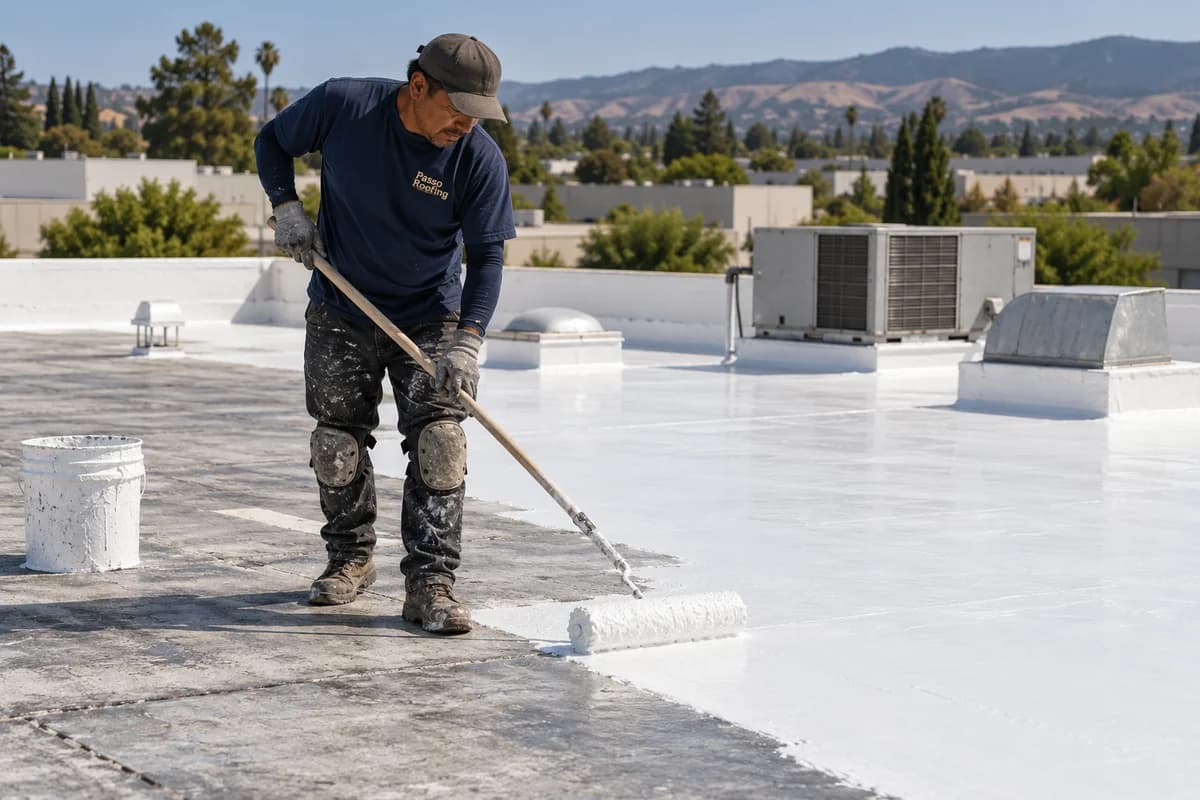
Signs you need roof coating & maintenance
The membrane is sound but chalky, cracked or faded
Modified bitumen, built-up, metal and older single-ply roofs lose their surface over time. If the seams hold and the insulation is dry, a coating renews the weather layer without a tear-off.
Ponding water leaves rings after each rain
Standing water ages a roof fast. A coating made for ponding, usually silicone, protects those low spots while the drains or tapered insulation are corrected.
Summer heat is driving up cooling bills
A dark roof absorbs heat all day. A white reflective coating lowers the surface temperature and the load on rooftop cooling units. The gain is largest in hot, sunny climates and smaller where heating costs dominate.
Nobody has been on the roof in a year or more
Clogged drains, loose flashings, dried sealant and debris against parapets are the usual findings on a neglected roof. A maintenance visit clears and reseals them.
Your roof warranty requires documented maintenance
Many manufacturer warranties on commercial roofs require periodic inspection and upkeep, with records. A yearly visit with a written report helps keep the warranty in force.
How the work is done
1Inspection and moisture survey
The roofer checks every seam, flashing, drain and penetration, and probes or scans for wet insulation. Wet areas are marked. Confirm first that the contractor is licensed where your state requires it and carries insurance.
2Decision: coat, repair first, or replace
If the insulation is dry and the seams can be repaired, the roof is a coating candidate. If large areas are wet or the membrane is delaminating, the roofer should say so and quote a replacement or a partial tear-out instead.
3Repairs and preparation
Open seams are welded or taped, blisters are patched, failed flashings are rebuilt, and wet sections are replaced. The surface is cleaned and left to dry. Rust on metal is primed. Any needed permit is pulled now.
4Seam and detail reinforcement
Seams, flashings, pipe boots and drain bowls get a layer of coating with embedded fabric or a brush-grade mastic. These details are where coatings fail when skipped.
5Coating application
The roof is coated by roller or spray to the thickness the manufacturer specifies, usually in two coats. Most coatings need dry weather and a suitable temperature range to cure, so timing depends on your climate and season.
6Walk-through and maintenance schedule
You get photos of the finished roof, the product data sheets, the warranty and a recommended visit schedule. Most coated roofs are checked once a year and after any major storm.
What affects the cost
No two roofs price the same. These are the things a written quote should list separately so you can compare one contractor with another.
Coating type
Silicone usually costs more than acrylic but handles ponding water. Acrylic is cheaper but should not sit under standing water. Polyurethane suits heavy foot traffic. Elastomeric products, a broad group that includes many acrylics, stretch with the roof as it moves.
Existing roof condition
The number of seams to repair, blisters to cut out and wet insulation to replace is the biggest swing in any quote.
Roof size and number of details
A plain open roof is quick. A roof crowded with curbs, pipes, skylights and parapets means much more hand work.
Specified thickness and warranty length
A longer manufacturer warranty requires a thicker finished film, which means more material. Ask what dry thickness the quote is based on.
Scope of a maintenance visit
A yearly checkup with drain clearing, sealant touch-up and a photo report is priced separately from repairs. Ask for a flat price for the visit and a rate for repairs.
Local rules and climate
Permit fees, energy code requirements and the length of your coating season vary by place. A short window of warm, dry weather can limit scheduling.
Repair or replace?
A coating is a restoration, not a new roof. It works when the existing membrane is attached, the insulation is dry, and the seams can be made watertight before the coating goes on. The coating then becomes the weather surface, and it can be recoated later.
A coating is the wrong choice when the moisture survey finds widespread wet insulation, when the membrane is shrinking and pulling away from the walls, when seams are failing faster than they can be patched, or when the deck is soft. It is also the wrong choice when the roof already carries more than one layer of wet or damaged material. Coating over a wet roof traps the water and can void the warranty. If a roofer offers to coat without a moisture check, get a second opinion.
Questions about roof coating & maintenance
What is the difference between silicone and acrylic roof coatings?
Silicone is moisture-cured, stays flexible, resists ultraviolet light and tolerates ponding water. It is slippery when wet and holds dirt. Acrylic is water-based and cheaper, but it can soften under standing water and needs warm, dry weather to cure. With ponding, silicone is the usual choice. On a well-drained roof, acrylic is sound.
Do I need a permit or a licensed roofer?
Rules differ by state and city. A coating is often treated as maintenance, so a permit may not be required, but replacing membrane or insulation under it can trigger one. Some states license roofers and some do not. Check the state board where one exists, ask for proof of insurance, and ask your building department about permits and local registration.
Do cool roof and energy code rules apply to me?
Energy codes differ by state and climate zone. Some, such as California's, set cool roof requirements for many low-slope roofs when the roof is replaced or recovered. Others set none. Where rules exist, the surface must usually meet minimum reflectance values, which many white coatings do. Whether a coating alone triggers a rule depends on the project, so ask your building department.
What is included in an annual maintenance visit?
Clearing debris from the roof, gutters, drains and scuppers. Checking and resealing flashings, pipe boots and curbs. Looking at seams, blisters and ponding areas. A short written report with photos and a list of follow-up repairs. Schedule it before your wet or snow season and after leaf fall, and add a check after any major storm.
Can a coating go on a shingle or tile roof?
Coatings are made for flat and low-slope roofs: single-ply, modified bitumen, built-up, metal and spray foam. Coating composition shingles is not recommended and can void the shingle warranty. Tile does not need it. A worn steep roof calls for repair or replacement.