
Signs you need flat roof repair & replacement
Puddles that stay for days
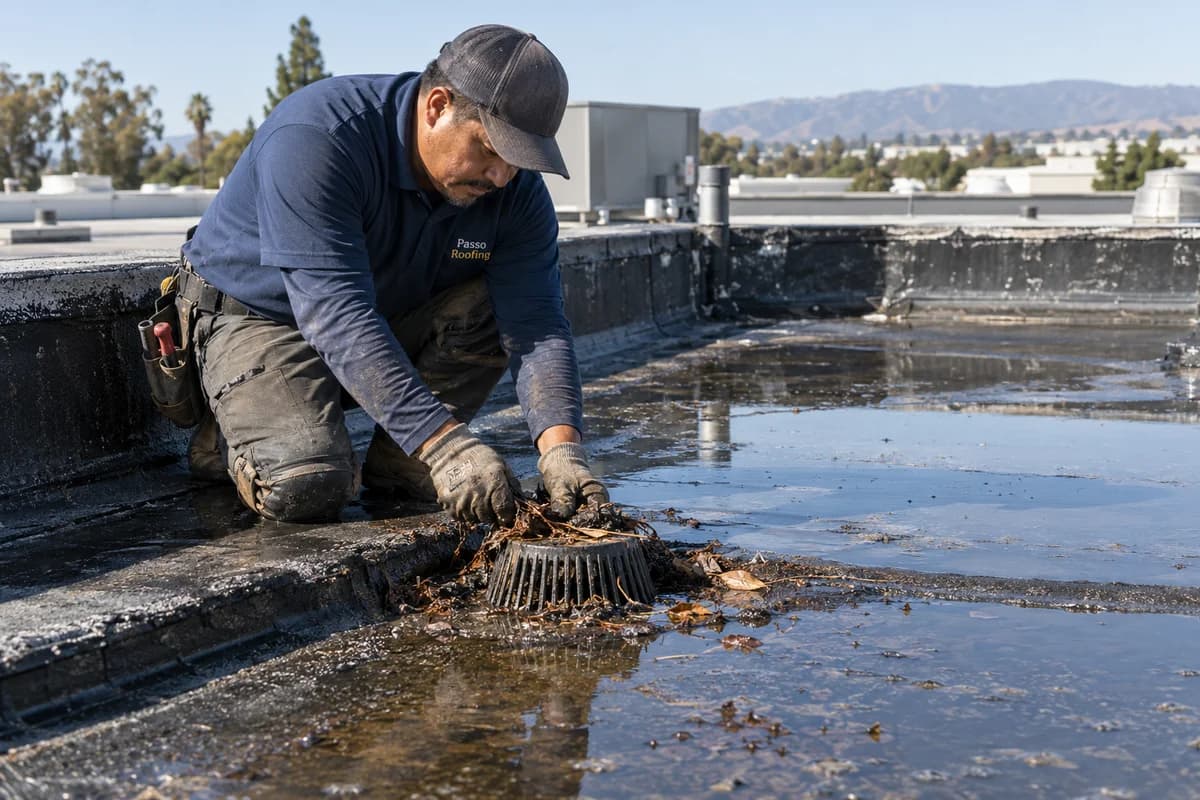
Ponding is the most common flat roof problem. If water is still standing two days after rain, the slope is wrong, the insulation has sagged, or a drain is blocked.
Seams you can lift
Single-ply membranes are welded or taped at the overlaps. Modified bitumen is torched or glued. When a seam edge lifts, water gets under the sheet and travels. Check the seams near drains and along the parapet first.
Bubbles, blisters and soft spots
A blister means moisture is trapped under the top layer. A soft or spongy spot underfoot means the insulation below is wet. Both get worse as heat or freezing weather pushes the trapped moisture around.
Cracked flashing at walls and pipes
The membrane turns up the parapet wall and wraps every pipe, vent and HVAC curb. Those turn-ups and the sealant at the top are where most flat roof leaks start.
Ice dams, sagging or heavy snow
In snow country, a flat roof carries a heavy load and meltwater can back up at drains. Sagging, slow drainage or ice at the edges are warning signs that call for a prompt look.
How the work is done
1Inspection and water test
The roofer walks the roof after a rain if possible, checks drains and scuppers, probes seams and flashings, and may flood-test a suspected area with a hose. On larger roofs a core cut shows the layers and whether the insulation is wet.
2Prep or tear-off
A repair or coating starts with cleaning and drying the surface and fixing failed seams or flashings. A replacement strips the old membrane and any wet insulation down to the deck, then checks the deck for rot or rust. Permits are pulled first where the city or county requires them.
3Fix the drainage
This is the step that gets skipped on cheap jobs. Tapered insulation, crickets behind HVAC curbs, new drain bowls or added scuppers correct the slope so water actually leaves the roof.
4Install the membrane
TPO and PVC come in wide rolls that are fastened or glued down and heat welded at the seams. EPDM is a rubber sheet that is glued, fastened or ballasted. Modified bitumen is rolled out in overlapping courses and torched, cold applied or self-adhered.
5Flashings and terminations
New flashing goes in at every pipe, curb, drain, scupper and parapet. Metal edge, counterflashing and sealant finish the perimeter.
What affects the cost
No two roofs price the same. These are the things a written quote should list separately so you can compare one contractor with another.
Size and how many layers come off
Square footage drives the base price. Old tar and gravel roofs are heavy and often have more than one layer, so tear-off and disposal are a bigger share of the job than on single-ply.
Membrane choice
TPO is usually the lowest cost single-ply. PVC costs more and resists grease and chemicals, which matters over restaurant kitchens. EPDM and modified bitumen fall in between and tolerate foot traffic well. Thicker sheets cost more and last longer.
Drainage corrections
Tapered insulation to build slope, new drains, or added scuppers add cost but solve the ponding that killed the last roof.
Wet insulation and deck condition
Wet insulation must be replaced. Rotted plywood or rusted metal deck is repaired per square foot. Neither is fully known until the old roof is open, so ask for a unit price in the bid.
Climate and energy code
Energy codes differ by state, city and climate zone. Some areas require a reflective roof surface. Cold areas stress insulation levels and snow load. Hot, sunny areas favor white membranes or reflective coatings. These requirements can add or save cost, so ask what applies.
Repair or replace?
Repair a flat roof when the membrane is dry and sound and the problem is local: one open seam, a cracked pipe flashing, a puncture, a clogged drain. The roofer cleans the area, patches with matching material and rewelds or reseals.
Coat a flat roof when it is aging but dry. A silicone or acrylic coating goes over the cleaned and repaired membrane, adds a waterproof skin, and often a reflective one. A coating will not fix ponding, wet insulation or widespread seam failure. Coating over wet insulation just traps the problem.
Replace when leaks move around from year to year, when the insulation is wet across a large area, when ponding is built into the structure, or when the roof is past the service life for its material. A large roof is a planned project. Schedule it for your area's dry or mild season, not in the middle of the wettest or coldest months.
Questions about flat roof repair & replacement
Why does my flat roof hold water?
Either the drains or scuppers are blocked, the insulation has compressed or sagged, or the roof was built without enough slope. Clearing drains is the first step. If ponding comes back, tapered insulation or added drains are the real fix, and the roofer should price that in any replacement.
TPO or PVC for my building?
Both are white, reflective, heat-welded single-ply membranes. TPO costs less and is a common choice on warehouses and offices. PVC handles grease, oils and some chemicals, so it is the better pick over restaurant kitchens. Ask for the sheet thickness in the bid either way, and check that the product meets your local energy code.
Can a flat roof be repaired in the rain?
A temporary patch or tarp can stop water getting in, but a permanent repair needs a dry, clean surface so the patch bonds. Cold weather also affects adhesives and sealants. Plan the real fix for a dry stretch and have the roofer stabilize things in the meantime.
I have a home with a flat roof. Is it treated differently?
The materials are the same as on a commercial roof, at a smaller scale. Homes with flat or low-slope roofs often have little attic space, so insulation and venting get attention in the plan.
How long does a flat roof replacement take?
A small residential flat roof is often done in a few days. A commercial roof is scheduled in sections so the building stays dry each night. The timeline depends on size, tear-off, deck repairs, permits and weather.