
Signs you need roof replacement
Leaks in more than one place
A leak over the kitchen one season and over a bedroom the next means the problem is the roof system, not one spot.
Worn-out underlayment or surface
When the roofer lifts a piece of roofing and the felt beneath it tears like paper, the waterproof layer is gone. The surface can look fine while the roof is at the end of its life.
Shingles that are bald, curled or cracked
Asphalt shingles lose their granules, then curl at the edges, then crack. Once a slope shows all three, repairs no longer hold.
Sagging roof lines
A dip along a ridge or in the middle of a slope points to a deck or framing problem under the roofing.
Repair estimates that keep growing
If each roofer who looks at the roof adds more to the repair list, replacement is the honest answer.
Age with no record of a re-roof
Every material has a typical lifespan, and climate can shorten it. A roof past its expected life is a candidate for replacement even without a leak.
How the work is done
1Inspection and written proposal
The roofer measures the roof, checks the attic, and writes a proposal that names the materials, the ventilation plan, and how deck repairs will be priced.
2Permit
A replacement usually needs a permit, and each city or county sets its own rule. The contractor normally pulls it and schedules any inspections. Confirm what applies at your address.
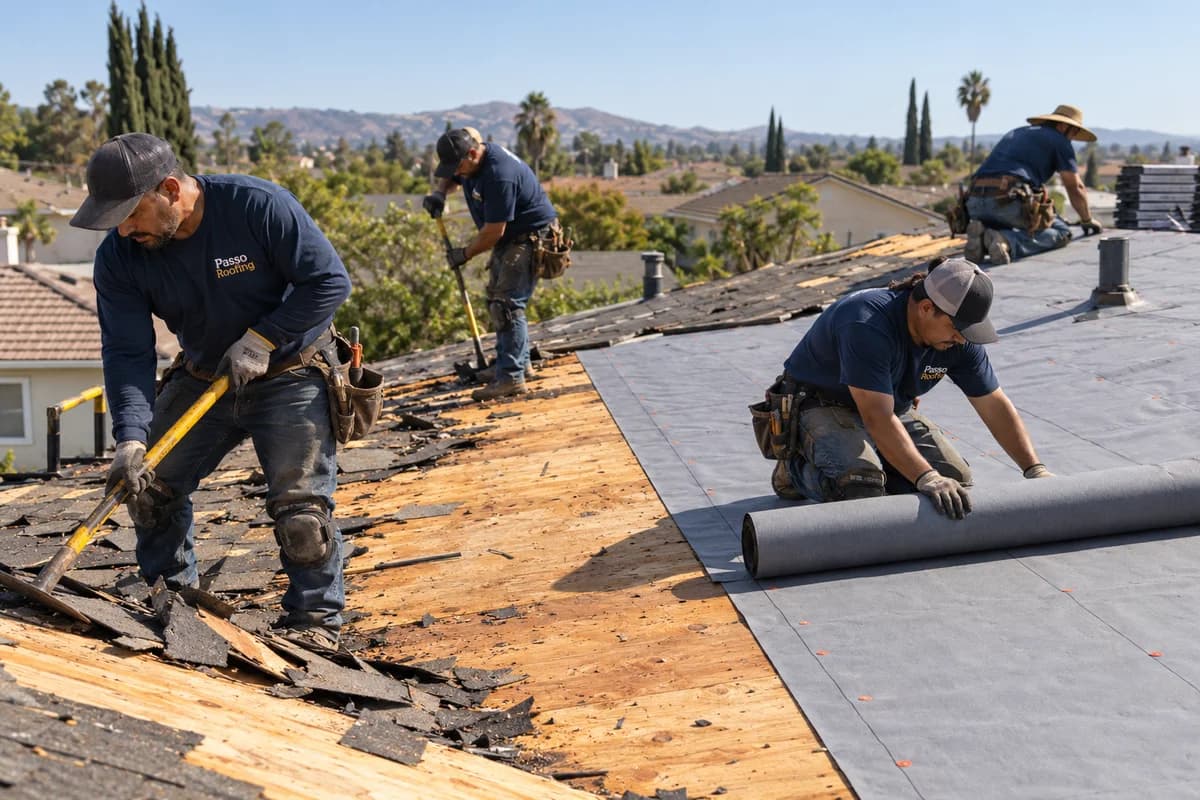
3Tear-off
Old roofing comes off down to the deck. Sound tile or slate can sometimes be stacked for reuse. A dumpster goes in the driveway.
4Deck repair
Soft, split or rotted plywood or board sheathing is cut out and replaced.
5Underlayment and flashing
New underlayment goes down with the laps facing the direction of drainage. New metal flashing is installed at the valleys, walls, chimneys and pipes.
6New roofing and ventilation
Shingle, tile, metal or another surface is installed to the manufacturer's instructions, which is what the material warranty depends on. Ventilation is added or corrected at the same time.
7Final inspection and cleanup
Where an inspection is required, the inspector signs off. The roofer sweeps the yard for nails, clears the gutters, and hands over the warranty paperwork.
What affects the cost
No two roofs price the same. These are the things a written quote should list separately so you can compare one contractor with another.
Roof size and pitch
Price scales with the area, measured in roofing squares. Steeper roofs take longer and waste more material.
Material
Asphalt shingle, metal, tile, slate, wood shake and flat membranes all land at different points. Weight matters too: a house framed for shingle may need an engineer's review before heavy tile or slate goes on.
Layers to remove
Some older shingle roofs have a second layer over the first. Every layer adds labor and disposal. Building codes limit how many layers a roof can carry, so the roofer may have no choice but to strip all of it.
Deck repairs
Rotted sheathing is only found after tear-off. Ask for a per-sheet rate in the contract.
Flashing, skylights and penetrations
Chimneys, skylights, solar mounts and multiple vents each need their own flashing detail.
Permits, codes, access and disposal
Permit fees and inspections are set by the city or county. State and local codes can require specific underlayment or ventilation. Solar panels that must come off and go back on add labor.
Repair or replace?
Repair wins when the damage is in one area and the rest of the roof has years of life. A failed flashing or a few broken pieces on a roof with sound underlayment does not call for a tear-off.
Replacement wins when the underlayment has failed broadly, when leaks move around, when a shingle roof is bald across whole slopes, or when the deck is sagging. Lifespan depends on the material and the weather it faces. Hail, heavy sun, freeze-thaw cycles and coastal wind and salt all wear a roof faster than mild conditions do.
If you are unsure, get a repair quote and a replacement quote from the same roofer and ask how many more years each one buys.
Questions about roof replacement
Do I need a permit to replace my roof?
Usually yes for a replacement, and rarely for a small repair. Each city and county sets its own rule. The roofer normally pulls the permit and schedules the inspections. A roofer who offers to skip the permit is a warning sign, because the homeowner can be left with the penalty.
How long does a roof replacement take?
A typical single-family home takes a few working days from tear-off to final cleanup. Large or steep roofs, extensive deck repairs, special-order materials and bad weather all add time. Ask for the schedule in writing.
What roof material is right for my house?
It depends on your climate, your house and your budget. Asphalt shingle is the most common choice in the country. Metal, tile, slate and wood shake are popular in certain regions. Hail, snow, wind, heat and fire risk all matter. Ask local roofers what holds up well near you.
Will a new roof change my energy bills?
It can. Proper attic ventilation and insulation help in both hot and cold climates, and some reflective surfaces reduce cooling load in hot ones. Energy codes vary by state and city. Ask the roofer what applies.
What should the warranty cover, and how do I check the roofer?
Two things: the manufacturer's warranty on the materials, and the contractor's warranty on the workmanship. Get both in writing, with the length of each and what voids them. Some states license roofers and some do not. Check the state board where one exists, and ask for proof of liability insurance, workers' compensation and any local registration before you sign.